Windy Days at Craft Shows: How Much Weight, What to Do With the Walls, and When to Take the Tent Down
Published November 19, 2026
The short version
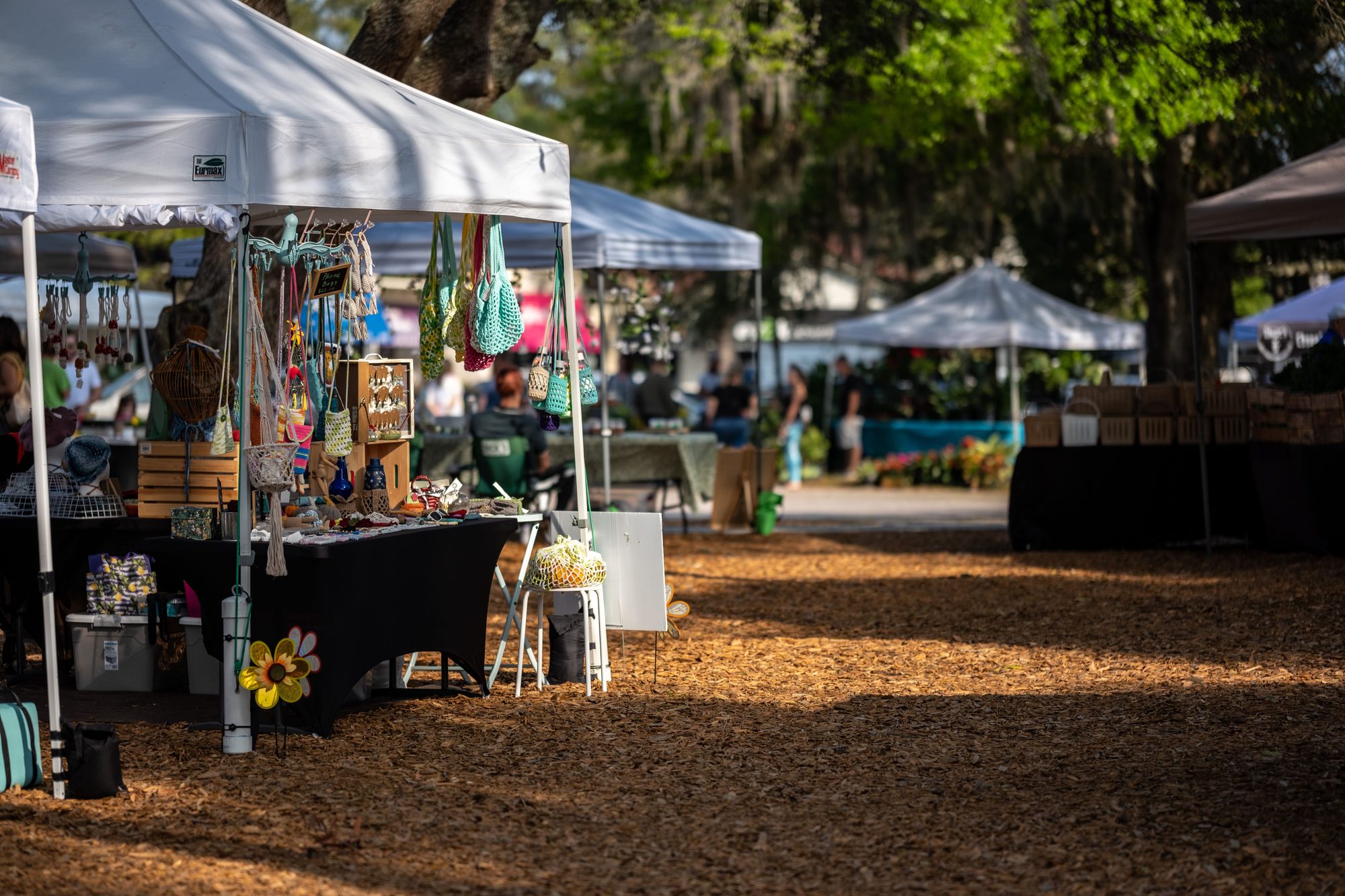
Wind is what causes problems at outdoor markets. A canopy safety guide in one Texas city's meeting materials opens by saying most accidents at street festivals and markets involve wind-blown tents, canopies and umbrellas. A Virginia Cooperative Extension post, quoting a retailer's blog, calls windblown canopies the number one cause of property loss and injury at outdoor events.
The practical approach: put about 40 pounds on every leg of a 10 x 10, keep the weights on from setup through teardown, take the walls off or loosen them when the wind picks up, and find out your show's take-down number before the day starts, because published thresholds range from 15 to about 40 mph and nobody agrees.
How much weight
Three published sources land on the same number for a 10 x 10. The Larimer County Farmers' Market's tent weight instructions, a 2014 document, say the required weight is 40 pounds per leg. Virginia Cooperative Extension says 40 per leg for a 10 x 10 and 50 for an umbrella, angled against the wind. The University of California, Irvine's April 2026 canopy guide says 40 per leg and 50 or more for umbrellas when the maker gives no weighting guidance, and adds that more weight may be needed in high wind.
Other sources come in lower or give a range. E-Z UP says about 24 pounds per leg in light wind and 40 to 50 or more in moderate to strong wind, plus guy lines. The Texas city guide says at least 20 to 40 per leg on a 10 x 10 and 50 on a 10 x 20.
Show rules are often lower still. Fairfax County's farmers markets require at least 20 pounds per leg, and Salem Saturday Market requires 20, with a $100 fine at Salem for a canopy that blows around because it lacks the required weight. Treat the organizer's number as the minimum and 40 as the number to carry. On a 10 x 20, E-Z UP says roughly double.
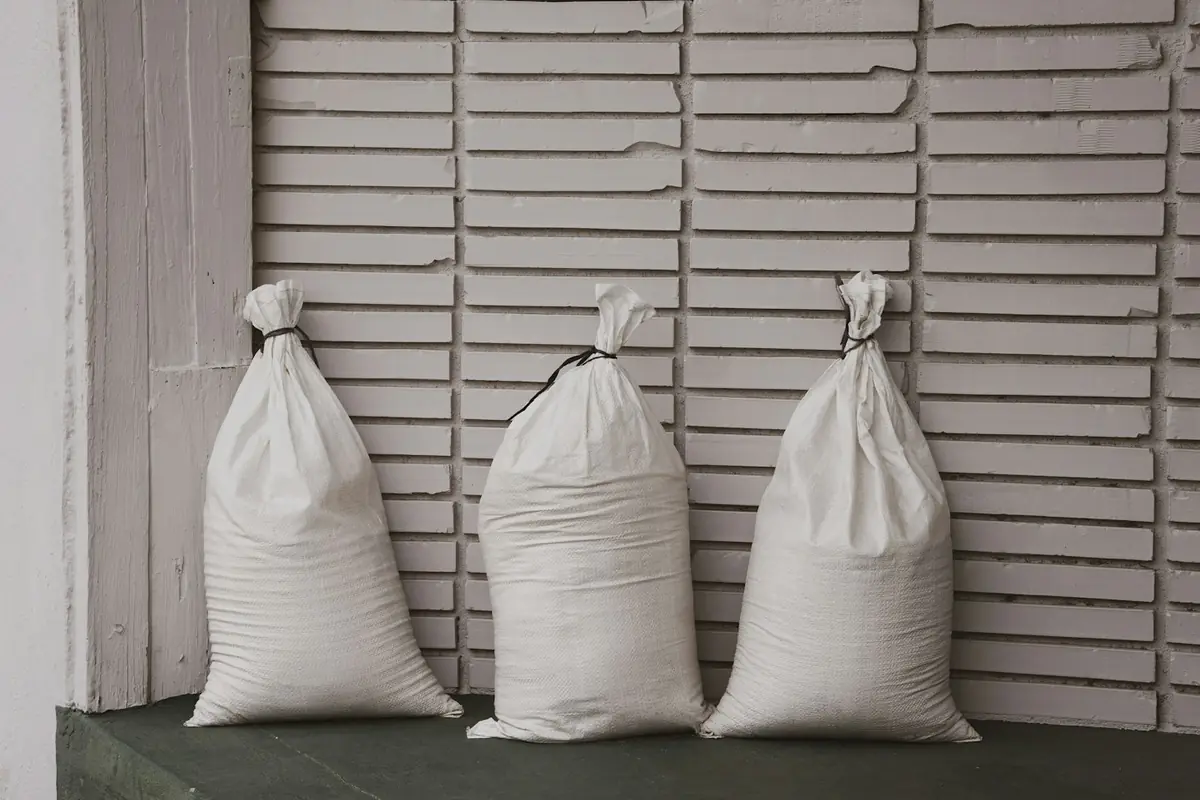
What counts as a weight. UCI's guide lists sandbags made for canopies, strapped upright to the legs, and buckets or jugs with a handle, filled with sand, water or cement and secured with straps, rope or bungee cords. It says to avoid tables, coolers and vehicles as anchors because they are trip hazards and often not heavy enough, along with large sandbags that cannot stand upright and tie on, and hard concrete blocks. The Texas guide also accepts cement-filled buckets and PVC pipe, canopy sandbags of 20 pounds or more, and water or sand buckets of 2 gallons or more, but rejects one-gallon jugs because a gallon of water weighs only 8 pounds. Fairfax allows a vehicle to anchor the back of a canopy but still wants weights on the front legs, and does not allow tying a canopy to display tables.
What vendors make. Vendors in an Etsy community thread (individual accounts, untested) mention kettlebells, hex dumbbells that lie flat and are easier to carry, weight bags of 30 to 40 pounds filled with landscaping rock, and homemade PVC tubes filled with cement and fitted with an eye bolt, about 45 pounds each. Larimer's design is similar: concrete-filled PVC pipe that straps to the leg with Velcro and has a door pull for a handle.
Hauling them. UCI suggests splitting weights into 10 to 20 pound pieces and using a cart. More in the carts guide.
Where the weight goes
The published guides put weights on the legs. UCI wants canopy sandbags strapped to the legs, Larimer's Velcro straps wrap around each leg, and Fairfax requires weights to be tethered with lines that are clearly visible. The Texas guide says the same about visible lines and advises against stretched-out lines or cords.
Vendors in the Etsy thread usually hang weights from the top corners of the frame instead, with straps through the weight and over the top of the frame, or a bungee to the interior rafters. One commenter worries about tearing a hole in the corner fabric. Another warns that weights attached only to the frame, and not to the canopy, can snap the frame in a strong gust, and calls foot weights ineffective when it is really windy. Larimer's design does both: Velcro to the leg, plus a bungee or rope from the weight to the top frame. Nothing in the published sources settles the question, so follow your canopy maker's instructions.
Stakes are a split too. E-Z UP pairs weight bags with stakes on grass, USA Ultimate says the short stakes that come with many pop-ups should not be relied on in high wind, and the Texas guide lists stakes among poor choices because a strong wind will easily pull them out of the ground. One Etsy commenter doubts a show would even allow stakes or lines that create a pedestrian hazard. Check the show's rules before driving anything into the ground.
Walls and roof vents
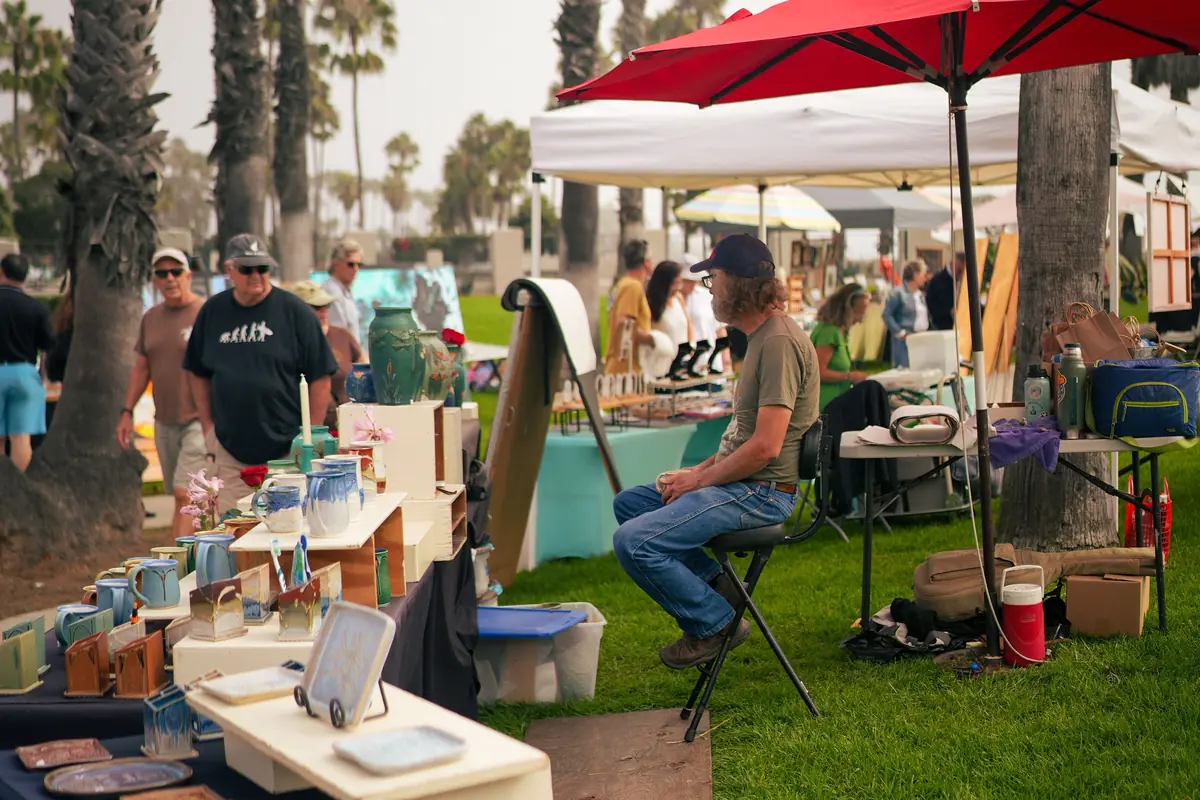
E-Z UP says to keep sidewalls open or remove them in wind because they add wind resistance. American Tent, a large frame-tent supplier, says to remove them and let the wind blow through, and that the second-best option is keeping them tight to the ground so they cannot flap. USA Ultimate says to re-secure or remove loose sidewalls. One Etsy vendor loosens the center Velcro strip on the top of the walls so some wind can pass through. Flourish's instruction sheet for its art-show frame tent says opening the wind vents helps release pressure in windy conditions.
When to take it down
There is no standard number, and none of the published ones is written specifically for craft-show pop-ups.
| Source | Number |
|---|---|
| Sedona Fire District (AZ), recommendations | Take every tent and canopy down above 15 mph |
| E-Z UP, canopy maker | Start reinforcing at 15 to 25 mph; take down if strong or unpredictable, especially near 35 to 40 mph |
| Hill Country Event Rentals (Texas rental company) | Lists 25 mph and up among conditions its tents are not designed for |
| American Tent, large frame-tent supplier (July 2026) | Evacuate at 35 to 38 mph; says its tents have no wind rating; its figures are for large rental frame tents, not pop-ups |
| Texas city canopy guide; USA Ultimate | No speed given |
If the organizer gives a number, that is the number to follow. Fairfax's handbook says the market will require a vendor with unsecured gear to take it down and sell without it, and that vendors are responsible for figuring out the right amount of weight for their own tent. Larimer's market also asks vendors to take down tents without adequate weights.
Setup and takedown are the moments the Texas guide calls most vulnerable, and Fairfax wants weights on from the moment the canopy goes up until just before it comes down. If a canopy has to come down during the market, both the Texas guide and Fairfax say to direct customers to a safe place first.
The other trap is a calm morning. The Etsy thread starts with a vendor describing a "super calm day, hardly a breeze" at a parking-lot show with about 30 vendors, when a gust came out of nowhere and upturned half a dozen tents. No one appeared to be hurt. Some vendors skipped weights because the day was calm, and others waited to see whether neighboring vendors had weighted first.
Your neighbors' tents
Other commenters describe the same thing from the other side: an unweighted tent kitty-corner from theirs that blew up and came close to their own, and a vendor who had said weights were not required and then had to grab her tent as it lifted. If a neighbor's tent has no weights, the market manager is the person to tell, since Fairfax, Larimer and Salem all put enforcement with the market.

Overnight
E-Z UP's blog says a pop-up can be left up overnight in calm weather if it is properly secured, but that it is generally not recommended, that wind above 15 mph is a reason not to, and that some events do not allow canopies to stay up after closing. Confirm with the organizer first. Overnight theft is covered in the theft guide.
Questions worth asking the organizer
At what wind speed do you pause or close the show? Who makes that call, and how will vendors hear about it? What weight per leg do you require, and do you check?
Where the published numbers disagree
- Weight per leg: 20 pounds (Fairfax, Salem) vs about 25 (Sedona) vs 20 to 40 (Texas guide) vs 24 to 50 or more (E-Z UP) vs 40 (Larimer, Virginia Extension, UCI).
- Water jugs: acceptable with a handle at UCI, rejected at one gallon by the Texas guide, and on E-Z UP's avoid list.
- Take-down speed: 15 mph (Sedona) to 35 to 40 mph (E-Z UP, American Tent).
What's still open
- No published take-down speed is written for craft-show pop-ups specifically.
- Only an excerpt of the Hill Country policy page is reviewed here, and the Sedona document appears to date from 2016, so check that it is still current.
- The Larimer instructions are from 2014 and the Virginia Extension post from 2019.
- The Etsy thread and other vendor accounts are individual and untested.
- Facebook groups are where much of the real-world wind talk happens, and the sources here do not reach them.
What a vendor can take from this
The safest point of agreement across the sources is straightforward: carry enough weight for every leg, keep the weights on from setup through takedown, open or remove walls when wind becomes an issue, and follow the organizer's wind and safety rules. The details remain unsettled. Published guidance differs on how much weight is enough, what counts as an acceptable anchor, and when a tent should come down. For those questions, the tent maker's instructions and the show's rules are still the deciding factors.
Maker and supplier pages
Links so you can check current guidance yourself. They open in a new tab.
- E-Z UP Canada, How to Secure a Canopy Tent in High Winds
- E-Z UP Canada, Can You Leave a Pop-Up Canopy Up Overnight
- American Tent, Guide to Event Tent Safety in Extreme Weather
- Flourish Displays, TrimLine Canopy assembly and care guide (PDF)
Sources
- Sedona Fire District, Tent and Canopy Safety Recommendations (PDF)
- Canopy Safety Guide, attached to Dripping Springs, TX city meeting materials (author and date not shown)
- Larimer County Farmers' Market, Tent Weight Instructions (2014)
- Virginia Cooperative Extension, Virginia State University, Tent Tips For Farmers Market Vendors During Hurricane Season (May 13, 2019)
- UCI Environmental Health and Safety, Canopy Safety Reference Guide (April 2026)
- Fairfax County Farmers Markets Handbook (2021)
- Salem Saturday Market, most commonly broken rules (undated)
- E-Z UP Canada, How to Secure a Canopy Tent in High Winds (maker blog)
- E-Z UP Canada, Can You Leave a Pop-Up Canopy Up Overnight (maker blog, undated)
- American Tent, Guide to Event Tent Safety in Extreme Weather (July 14, 2026)
- USA Ultimate, Wind Policy (PDF)
- Hill Country Event Rentals, Weather Policy
- Etsy Community, PSA: Always weigh down your canopies and tents (vendor accounts, undated)
- Flourish Displays, TrimLine Canopy assembly and care guide (PDF)
Keep reading

Keep track of the shows you want
Save listings, keep application deadlines in one place, and read what vendors who have worked a show say about it before you commit to a booth fee in your area.